Bo-jutsu was also called Kon-Pou. It is said that officials (policemen) wielded Bo-jutsu. According to “The Okinawa Language Dictionary”, Bo is described as “for carrying loads or for martial arts”. Bo was one of the necessities of life for townsmen and fishermen. This art was studied and practiced for self-defense, and excellent techniques have been handed down. There are also techniques introduced from China. It is presumed that Sapposhi (high-ranking Chinese missions) from Fuzhou province brought Bo-jutsu with him. Also, Okinawans went to Southern China or Shanghai and learned Bo-jutsu. These Okinawans studied and developed Bo techniques after they came home. The Bo techniques described in the Chinese war tactics book called “Bubishi” and “Kikoshinsho” are very similar to ones we practice today. Both books say that Bo jutsu is the essence and foundation of all martial arts using weapons. After researching various documents on Okinawan Bo-jutsu, it seems to be combined with Chinese Bo-jutsu and evolved to fit the physical features of the Okinawan people and the political situation of the islands
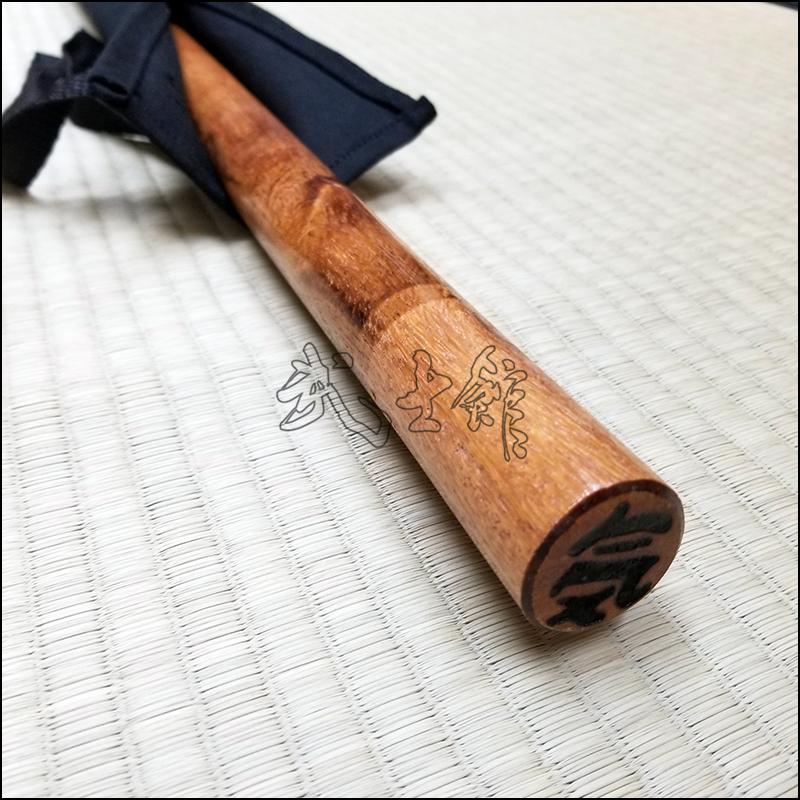
The Bo-jutsu forms practiced by the samurai (warriors) have names ending in “Kon”. These art forms were presented to the king and are distinct from “Son-Bo”, the common people’s Bo-jutsu. In ancient times, the Kuba (Chinese Palm tree) was used as material for Bo. The grain of this hard tree is wavy-like, the same as oak. Kuba was an ideal material for Bo. It is not easily broken or bent in actual fighting and, in case it is broken, it’s still an effective weapon as the broken point is quite sharp. However, in recent years, oak has been used as a Bo material.
Bo is commonly called 6 feet Bo (roku shaku Bo), simply because its usual length is 6 feet. However, the Bo used by warriors at Shuri Castle was 5 feet 8 inches. This Bo was shortened to fit inside the house to avoid any disadvantage in case of a fight indoors. Besides 6 feet Bo, there are 3 feet, 4 feet Bo as well as long ones ranging from 8 feet to 9 feet to 13 feet.
Kama-Jutsu
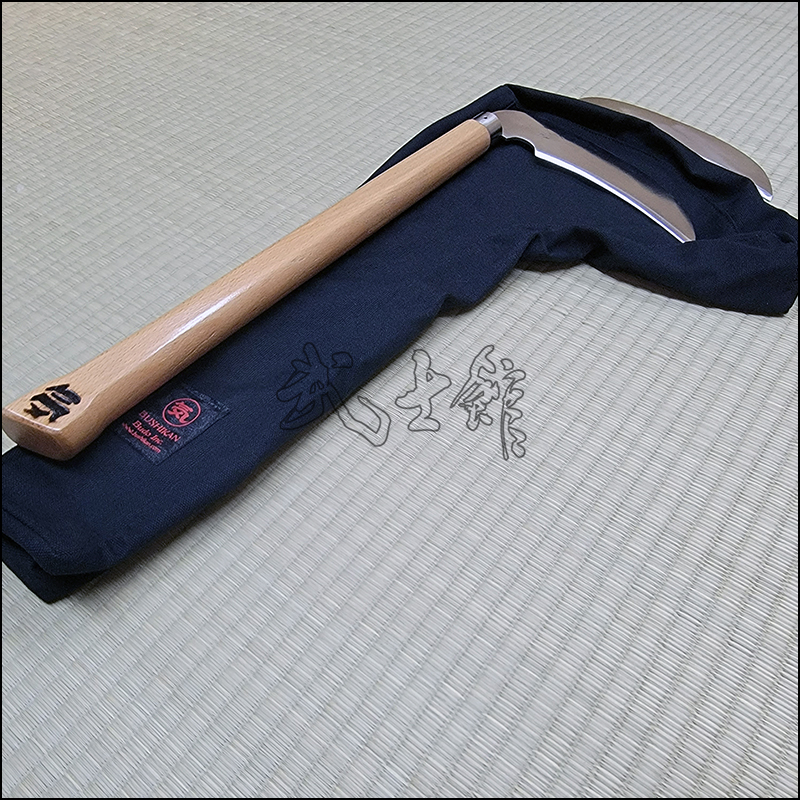
Kama- jutsu is also called “Kama nu ti”. About 700 years ago, in King Eiso’s reign, agricultural tools such as hoes and sickles began to be made of iron. Along with these farm tools, many weapons were imported from mainland Japan and China in that era. Kama was first used as a weapon by farmers around 1314 A.D. when warriors and farmers rose up against King Tamagusuku’s oppression. As a result, three chieftains were established.
Today’s Kata came into being after Chinese martial arts were brought into Okinawa. In this jutsu, a pair of Kama are used separately. There was also a Kama attached to a 150cm Bo. The effect of a Kama increases when used in a pair. In fighting, another Kama is hidden behind the back for throwing. The angle of the Kama to its handle is 90 degrees, but it can be 30, 45, or 60 degrees when used in a pair, increasing its killing efficiency. It is said that even sword masters avoided fighting Kama masters. The late Shinko Matayoshi Sensei, was so skilled at this Kama-jutsu that he was referred to as “Matayoshi the Kama”.
Kuwa-Jutsu
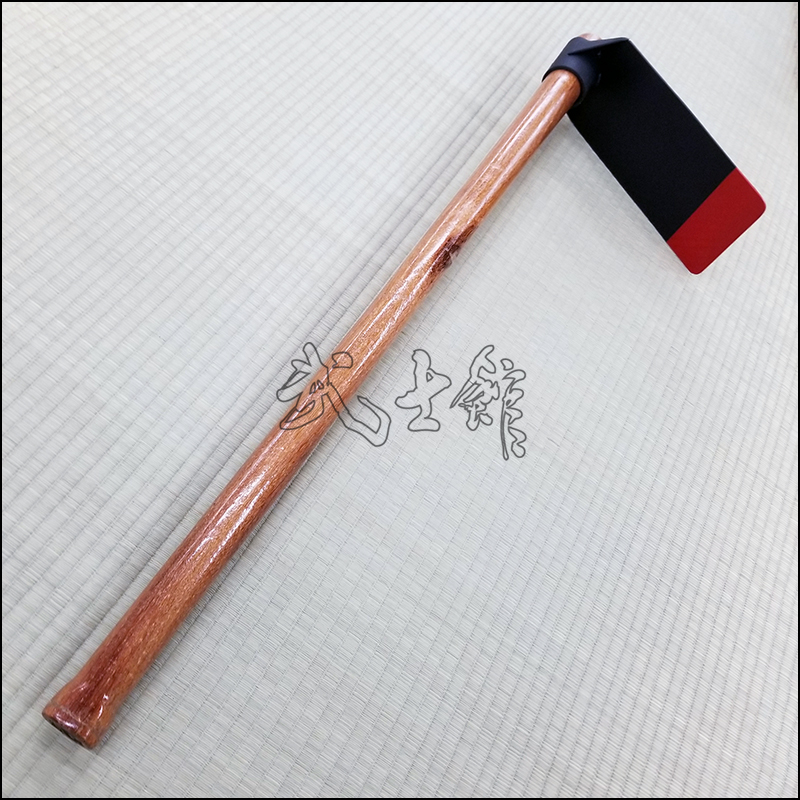
Kuwa-jutsu developed in the same way as Kama-jutsu. Both are edged weapons in Okinawa classical martial arts. Kuwa was the weapon used mostly by farmers, and it has a sharp edge and handle for defense and attack. Kicking up mud at an attacker is one of its unique moves. Kuwa-jutsu was studied by martial artists and upgraded with the influence of Chinese martial arts before becoming an actual warfare weapon. In Okinawa Kuwa-jutsu is practiced exclusively by Matayoshi Kobudo practitioners. Outside Okinawa; in Fuzhou and Shanghai, there are martial artists who are still able to use this jutsu.
Manji-Jutsu
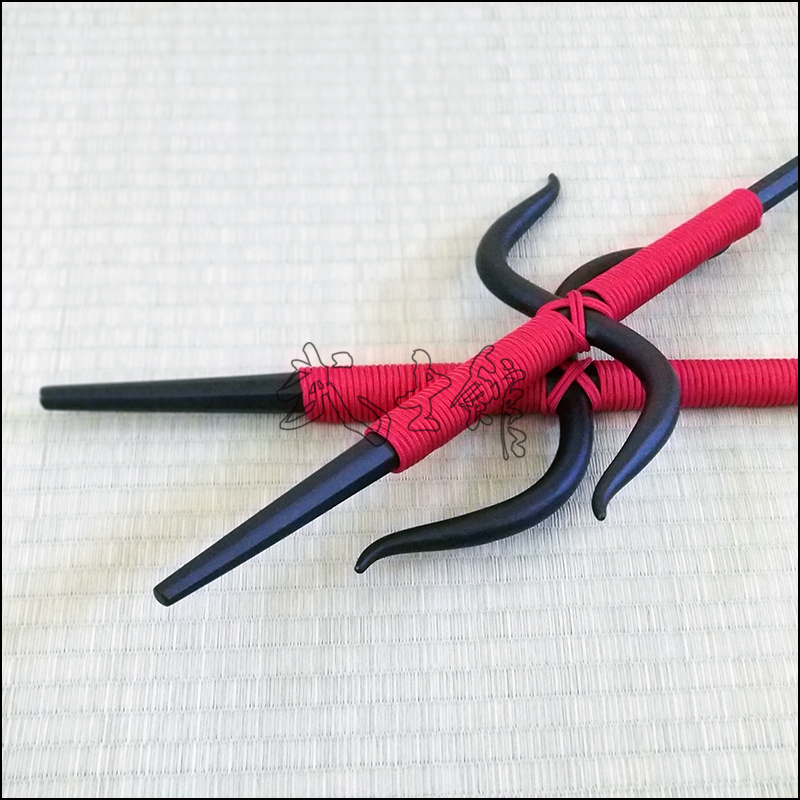
Manji Sai is a weapon that mainly is to be used in conjuction with Nunti Bo (please see Nunti-Jutsu). The common way to carry this kobudoweapon is in a set of two, primarily hidden in the belt or sash. The great similarity of Manji Sai with the regular Sai allows the person carrying this weapon to use it as a Sai, this means to attack or defend, or to be thrown at an opponent. The main differences between the Manji Sai and the regular Sai resides in the tsuka (handle) and the opposite direction of one of the tsuba (prong) of the Manji Sai. It has been actively practiced in Okinawa as a martial art for a long time. This technique was handed down to the late Shinko Matayoshi Sensei by Kingai Sensei in Shangai, China.
Nunchaku-Jutsu
It is thought that women invented Nunchaku to defend themselves after Satsuma’s subjugation of the Ryukyu Kingdom about 380 years ago. The idea of making this weapon originated with the tool, which peels off the bark of Abaca (banana tree) for weaving. However, in Fuzhou China, there was a weapon called “Nisetsu Kon” or “Ryosetsu Kon” but pronounced “Nunchaku” in dialect. Its technique has a long history and is similar to Sansetsu Kon. Therefore, this Nunchaku jutsu seems to be influenced from Fuzhou China.
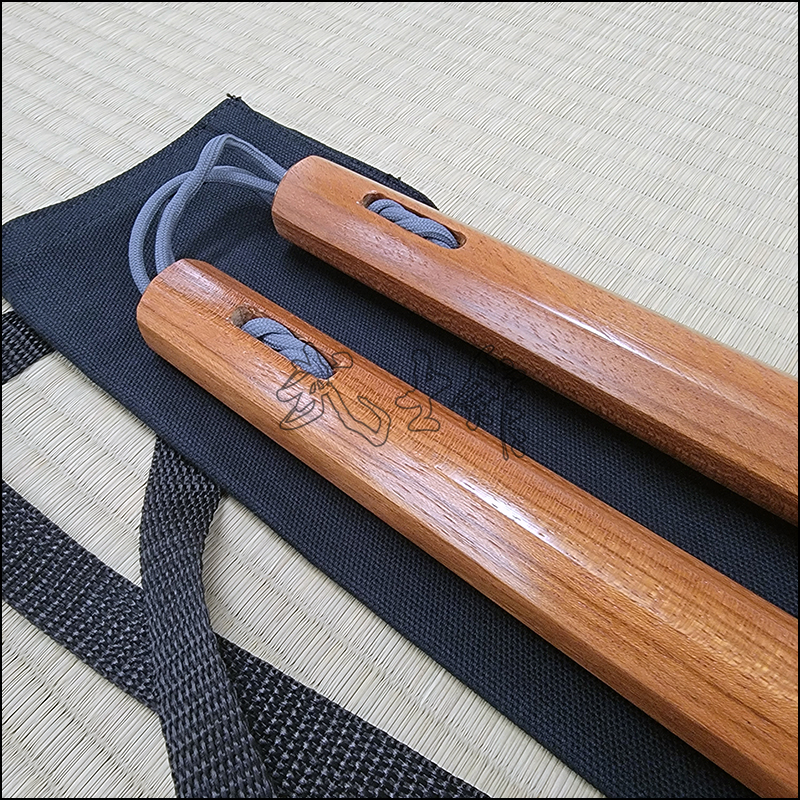
Also called “Sosetsu Kon”, Nunchaku is a pair of wooden sticks, usually made of oak, tied together at one end by two strings. The art of Nunchaku was developed for self-defense. Easily concealed, similar weapons are still used today in guerrilla war in Korea and around Southeast Asian countries.
Nunti-Jutsu
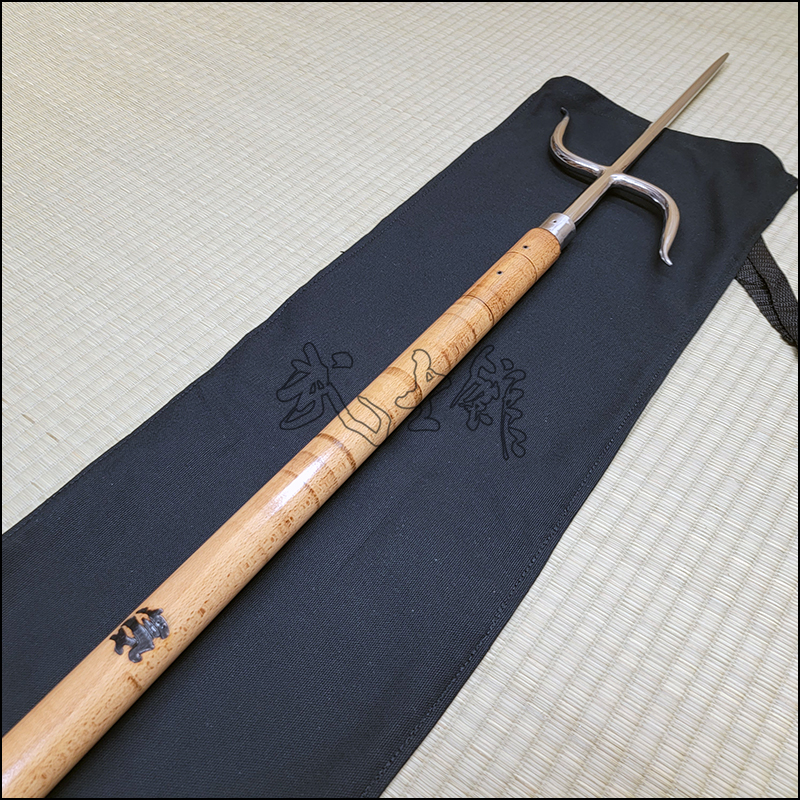
Nunti means Nuchidi (thrusting hand). This Ming era weapon is called “Sabu” in the Chinese war tactics book “Bubishi”. It is similar to Japanese “Yari” (spear) and was probably brought into Okinawa about 600 years agokobudo when trading between China and Okinawa started. Nunti was originally used as a fishermen’s tool. As a martial art, Nunti jutsu resembles Bo jutsu, which was performed on Tsuken Island. Two or three Manji are used in fighting; one attached to the Bo as well as two at the side or one in the hand for throwing. The late Shinko Matayoshi Sensei learned this art from Kingai Sensei in Shanghai China.
Sai-Jutsu
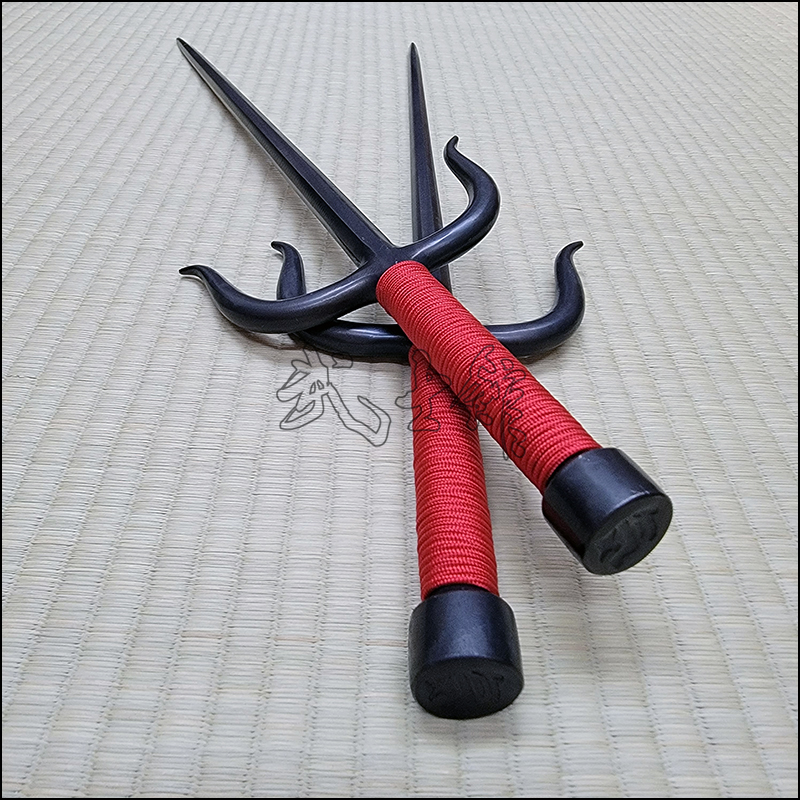
This weapon, shaped like a man, was brought into Okinawan kobudo by Chinese officials in a trading era. Officer’s Chiku and Saji, who acted as both judge and police at the same time, carried Sai in order to protect the King, control crowds, and catch criminals. There was a similar weapon called “Jutte” which was used by police officers in mainland Japan. However, Sai is usually used in pairs with a third sometimes carried as a back up. It is good for both defense and attack. Sometimes it can even be thrown to stab a runaway criminal. Sai implies an ornamental hairpin and it was mentioned in Chinese war tactics book “Bubishi”. It has been actively practiced in Okinawa as a martial art for a long time. This technique was handed down to late Shinko Matayoshi Sensei by Higa Sensei (Gushikawa Tiragawa) who came to Gushikawa village from Shuri.
Sansetsukon-Jutsu
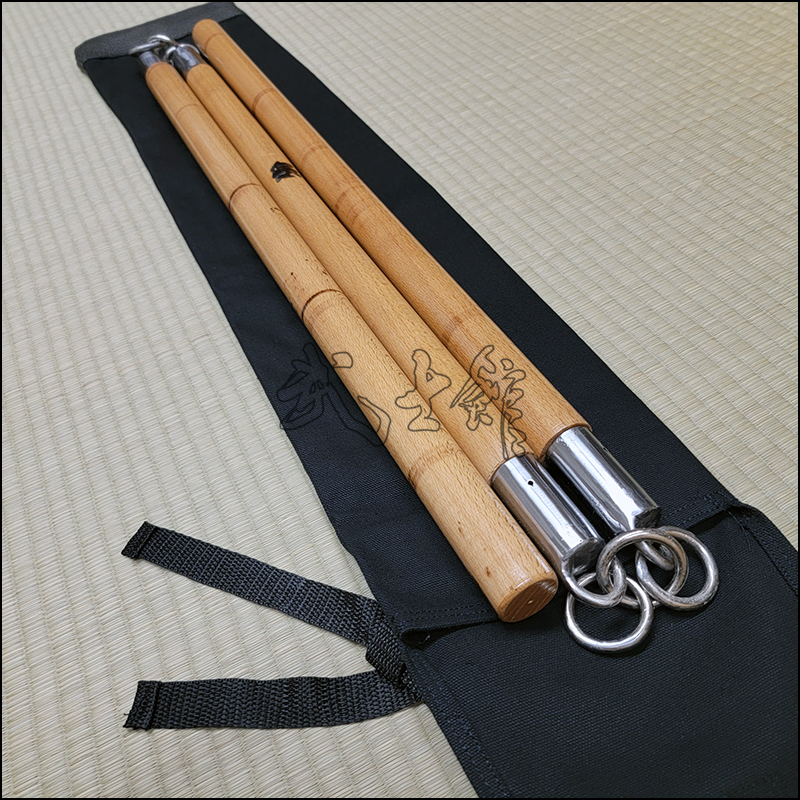
Sansetsukon, properly called Chinese Shorin Temple Sansetsukon, is a historical weapon, which appears in the Chinese book “Sangokushi”. Its distinctive feature is three 70 cm sticks chained together making it much longer than a Bo. It can be used swinging around, or as a Bo, using one’s whole body space to fend off an attacker. This weapon was developed at the same time as the Nunchaku in China. There is also another type of Sansetsukon that is smaller, which was developed as a concealed weapon.
Suruchin-Jutsu
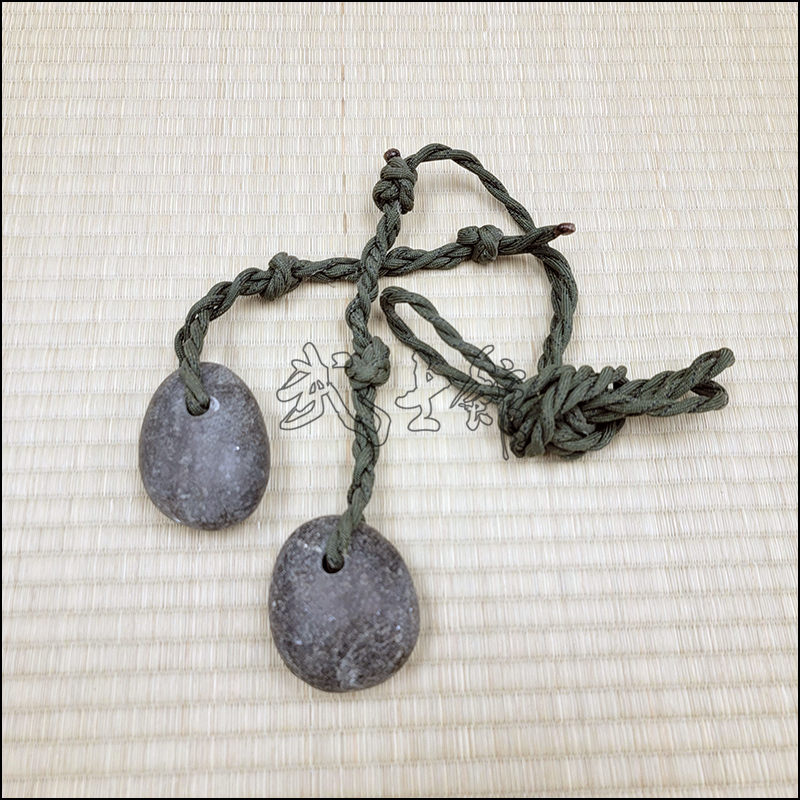
The development of this weapon goes back as far as the Stone Age. It is said that it was originally used to chase away lions and tigers. This weapon is a stone tied to a palm fiber rope, which can be 90cm, 150cm, 180cm, or 240cm in length. Shorter Suruchin can be used to hit an attacker and Suruchin with a long rope can be swung around and then wrapped around the attacker to bring him down.
This martial art was practiced in Okinawa for a long time, and its technique was perfected by the influence of the Chinese martial art “Muchi” (rod art). The technique is also similar to the weapon used in “Ryusei” in Chinese martial arts. Similar weapons are found throughout the world
Tinbe-Jutsu
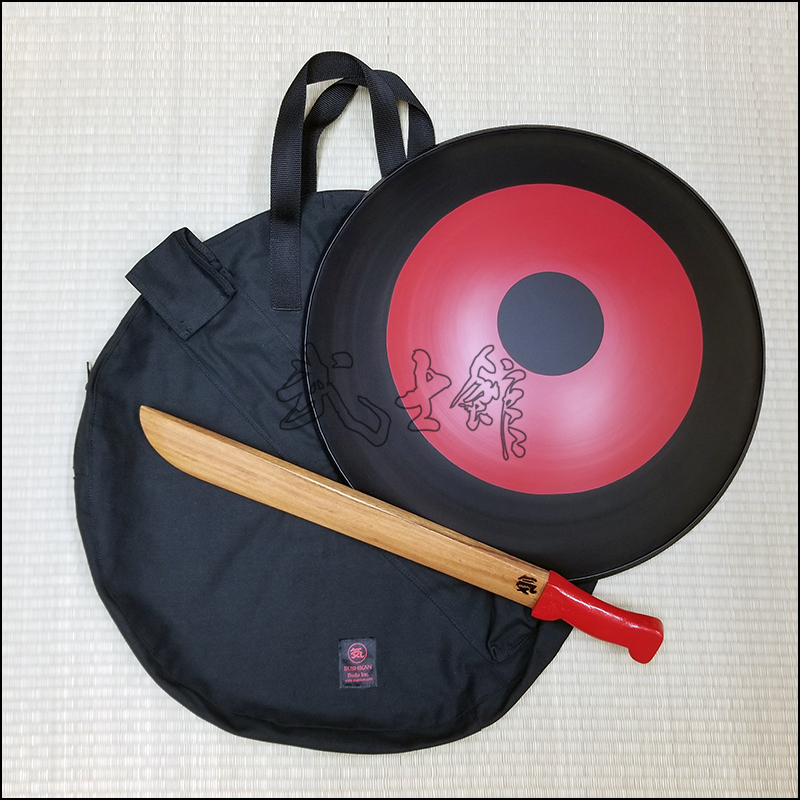
This martial art is derived from Shorin Ken (Kenpo) of China. The late Shinko Matayoshi Sensei learned this technique from Kingai Sensei. Tinbe carries a long history, and in Okinawa it had already been used in actual warfare in the warring states period. In Matayoshi Kobudo Tinbe it is practiced in conjunction with Nata or machete as a set. The shield was made of the bark of palm coated with oil or weaved bamboo covered with hide. The shield carried the symbol mark of the Ryuha and was used to intimidate the enemy.
Tunkua-Jutsu
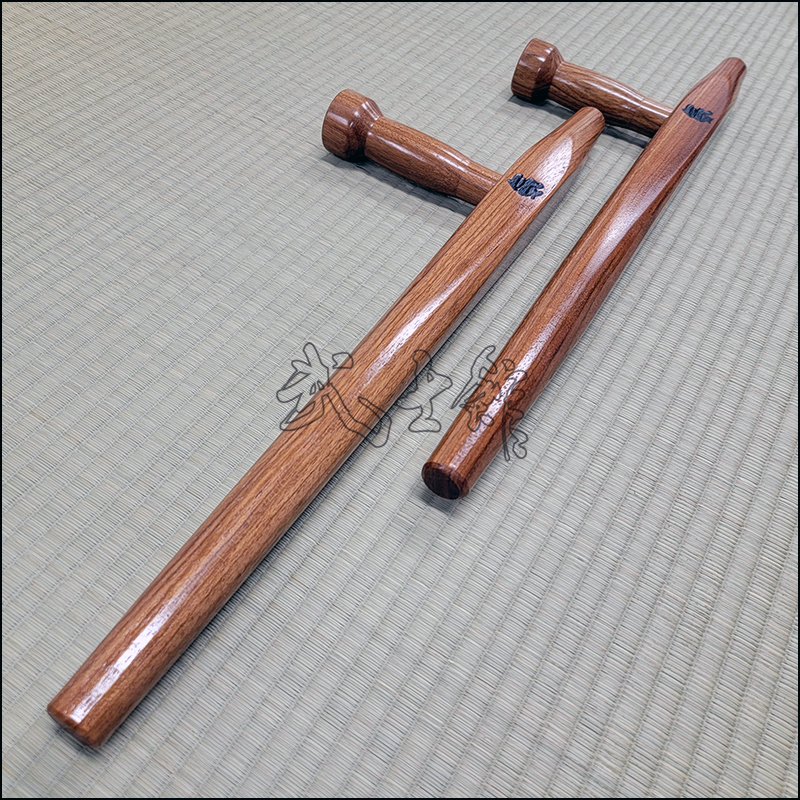
This weapon is also known by other names such as Tonfa or Tuifa. According to old Okinawan documents, Tuifa seems to have been the right name.
This weapon originated from an ordinary household utensil, a handle for a mortar (or a hand mill). Its main purpose is defense. Attacking with Tunkua can also be powerful with the proper use of the wrist. This art descended from martial artist Irei Sensei in Nozato Chatan village.
Ueku-Jutsu
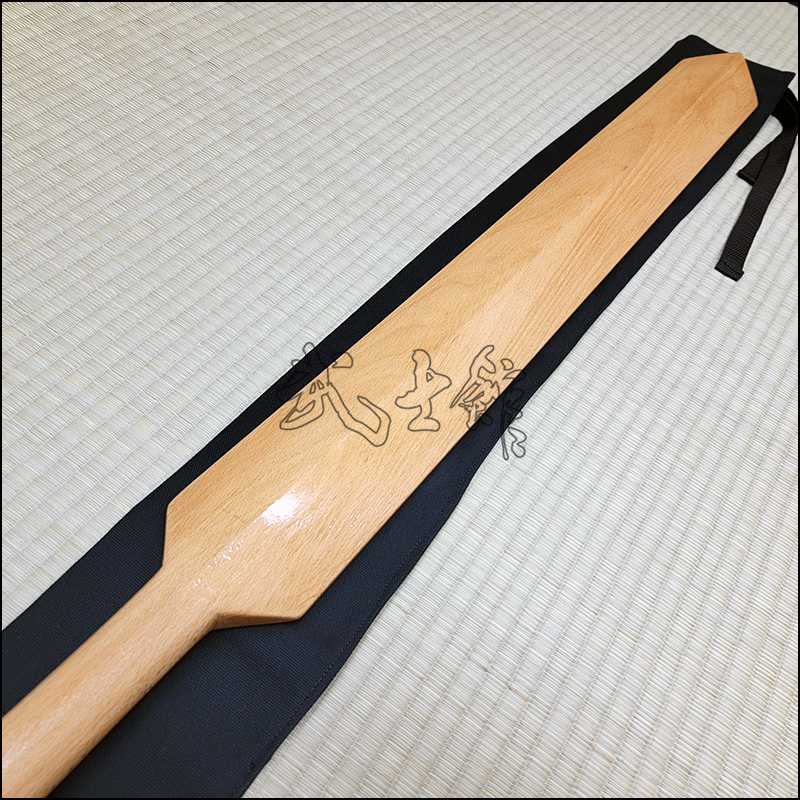
This martial art was derived and developed from the art practiced in Shanghai China. There is a legend in Tsuken Island that in the Ryukyu Kingdom era, a samurai (warrior) called Chikin Uekata Masanori was defeated in contention for the throne. He was to be executed by being sunk in the sea. However, since he was a Bo expert, the executor couldn’t bring himself to carry out the sentence. So he asked a fisherman named Asato to take care of this samurai in secret. Asato learned Bo techniques from Uekata but soon surpassed him and became a Bo expert. Asato was called “Chikin Akachu” because he had a red sun burnt face.
Ueku is an oar for a boat. Fishermen created techniques to defend themselves from the attacker who had swords, spears, or Bo. The blade becomes a tremendously powerful weapon. This is a weapon well suited for “me-tsubushi” (to blind) kicking up beach sand. Ueku is a sword to fishermen.